
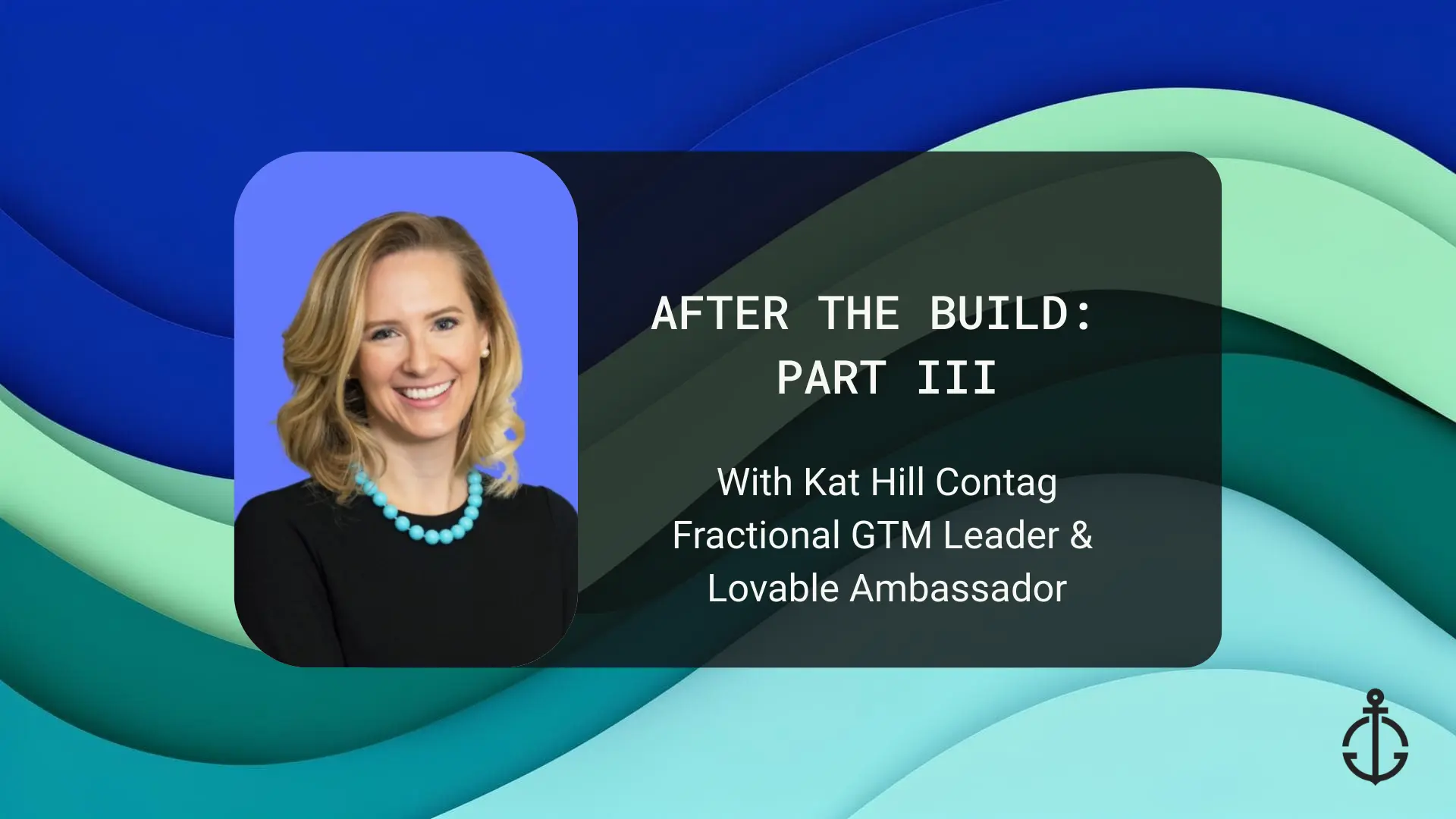
This conversation completes a three-part exploration of what actually comes after a build. That narrow window where momentum can either compound into something durable or fade if it's mishandled.
With Kat Hill Contag, the focus turns practical. What do you do after something works, and how do you turn momentum into leverage without defaulting to scale, funding, or overcommitment.
Not every build needs to become a company. Sometimes the most strategic move is letting a thing stay light, useful, and alive long enough to teach you what it wants to become.
After the confetti falls
After a build, there's a moment most people don't talk about. The demo is submitted. The winner is announced. The congratulatory messages roll in. For a brief stretch, everything feels obvious.
Then the noise fades. What remains is a more personal question. What's this actually for now?
Not what it could become in the abstract, or what social media thinks it should become, but what it's meant to do in the context of your real life, your existing commitments, and the kind of work you want to keep doing.
That's the moment Kat Hill Contag helped me think through.
Kat is a Lovable Ambassador, a SheBuilds Season 01 winner, and the creator of AI Recess. She's also a fractional growth and marketing leader with deep operator experience across consumer products, professional services, and B2B technology. What stood out to me wasn't just what she built, but how deliberately she chose not to rush the next step.
This conversation is about what happens when momentum is real, but direction is still open. And how operators decide what to do with a win without turning it into an obligation.
This post is part of a broader series
This conversation completes a three-part exploration of what actually comes after a build. That narrow window where momentum can either compound into something durable or fade if it's mishandled.
In my conversation with Elena Verna, we talked about optionality and how to make decisions that keep doors open rather than closing them too early.
With Whitney Menarcheck, we explored emotional momentum. The human conditions that help people stay in the game long enough for strategy to matter.
With Kat Hill Contag, the focus turns practical. What do you do after something works, and how do you turn momentum into leverage without defaulting to scale, funding, or overcommitment.
The win didn't come from clearing her calendar
One of the most important details about Kat's SheBuilds win is how ordinary the circumstances around it were.
She built AI Recess while running a full consulting schedule. Four active clients. Peak revenue. Real life fully in motion. There was no sabbatical and no grand pause to go all in.
And then she won.
It was like… okay. What am I going to do with this thing?
That question wasn't just about the product. It was about direction.
Rather than immediately scaling, Kat chose to finish her client work and use a natural pause at the end of the year to step back. She wanted to understand what this build was actually unlocking before deciding what it should become.
That restraint set the tone for everything that followed.
Not every build needs to become a company
Kat has deep roots in Palo Alto. She knows the default script well. Build the MVP. Scale fast. Raise. Repeat.
But experience had already taught her what that script leaves out.
Before AI Recess, Kat built and sold a physical product company, manufacturing in the U.S. and China and selling into The Container Store. She operated a construction subcontracting business in Florida and implemented real GTM systems from scratch. She worked directly with investors and learned which paths she didn't want to repeat.
So when AI Recess gained traction, she resisted the reflex to turn it into venture-scale SaaS. Instead, she reframed it.
Rather than a company, AI Recess became a platform. Something that could create leverage without locking her into a single outcome.
It's a way to teach operators (especially non-technical women) how to build with AI, prove that proximity to the problem matters more than technical pedigree, and to create leverage through workshops, content, consulting, and partnerships without pressure to scale prematurely.
AI Recess isn't a pitch deck. It's proof of work.
Why operators are exactly who should be building with AI
This belief runs through everything Kat teaches.
You don't need to code. You don't need a technical background. You don't need permission.
If you're close to the business, if you understand workflows, constraints, and real user pain, you already have what most builders lack.
That's why Kat focuses her work on operators, MBAs, and business leaders who have historically been taught to hand problems off instead of making solutions. In an AI-first world, that instinct is becoming a liability.
The people closest to the work are often best positioned to improve it. AI simply removes the excuses.
How Kat teaches Lovable to others without turning it into a demo
When Kat runs a session on Lovable, she doesn't start with features. She starts by resetting the room.
Many people still equate AI with ChatGPT. So she zooms out first, clarifies what an AI builder actually is, and only then does she build. Live. Not a rehearsed demo or a polished prototype, but a real project executed in real time.
What makes it work is the discipline underneath it.
Kat starts with the problem. She names who it's for. She talks through the user flow before she touches a screen. Then she uses constraints, like a simple design system or a clearly defined scope, to keep the build from spiraling.
It's not about polish. It's about thinking clearly and shipping something real.
Winning is optional. Participation is not.
Lovable just announced the next season of SheBuilds, coinciding with International Women's Day (March 8th), and Kat offered a piece of advice that felt especially important to surface.
Yes, winning created an incredible and truly unexpected platform for her. But if participants want to get real value out of a communal build experience, the focus can't be on reverse engineering how to win. It has to be on continuity, shared learning, and forward motion.
That focus misses the point. Winning is a cherry on top. The value is in building.
That mindset showed up in a small but telling way. Kat declined to share her original demo video when asked. Not out of gatekeeping, but because turning the process into a template undermines the learning. The work isn't meant to be copied. It's meant to be experienced.
I share Kat's sentiment and can personally attest that nobody wants to emulate my last-minute, sleep-deprived demo submission video either. But I was proud to submit it one minute before the deadline, and that pride had nothing to do with polish.
For Kat, building is closer to sport than competition. You show up. You practice. You learn what you're made of.
Which is why our conversation kept circling back to the same truth. Community doesn't happen automatically. It has to be designed.
Create the conditions. Reduce friction. Invite contribution. Then step back and let people rise.
How to carry these sentiments into your next post-build push
I came into this conversation at my own inflection point. Weighing full-time roles, consulting, new ventures, and new cities. High optionality and real pressure to place bets intentionally.
Kat didn't give me a playbook. But she did give me permission to treat a build as leverage rather than obligation. To let something stay useful before forcing it to be big. To optimize for learning and durability instead of momentum alone.
Sometimes shipping something meaningful is already the win. Even if the build is just for your own enjoyment, you've proven your capabilities to yourself.
Momentum only compounds when it's put to work intentionally.
As Elena Verna (Head of Growth at Lovable) shared during the SheBuilds Season 02 kickoff, not every build needs to become a revenue-generating B2B startup. Not every win needs to scale. Sometimes the magic is in the build itself. Sometimes the outcome isn't a launch, but a checkpoint that shows you what forty-eight focused hours can unlock.
The most strategic move is often letting a thing stay light, useful, and alive long enough to teach you what it wants to become.
You can read the full Anchor GTM series exploring what comes after a build across decision-making, emotional momentum, and operator execution.
Where to find Kat Hill Contag
Kat Hill Contag is a Lovable Ambassador, SheBuilds Season 01 winner for AI Recess, and fractional growth and marketing leader who helps operators turn momentum into leverage without defaulting to scale.
- Kat Hill Contag: Her personal site and consulting practice
- AI Recess: Where she teaches operators to build with AI
- LinkedIn: Where she shares practical thinking on building and GTM
- MN Women in AI: A community she helps steward
- SheBuilds on Lovable: Buildathon on March 8, 2026
Built With
(Building in Public)About
Anchor GTM Anchor GTM is a space for first-hand operator insight from the messy middle of building, shipping, and deciding what comes next. No playbooks. No hot takes. Just pattern recognition from people close to the work.
More from the series
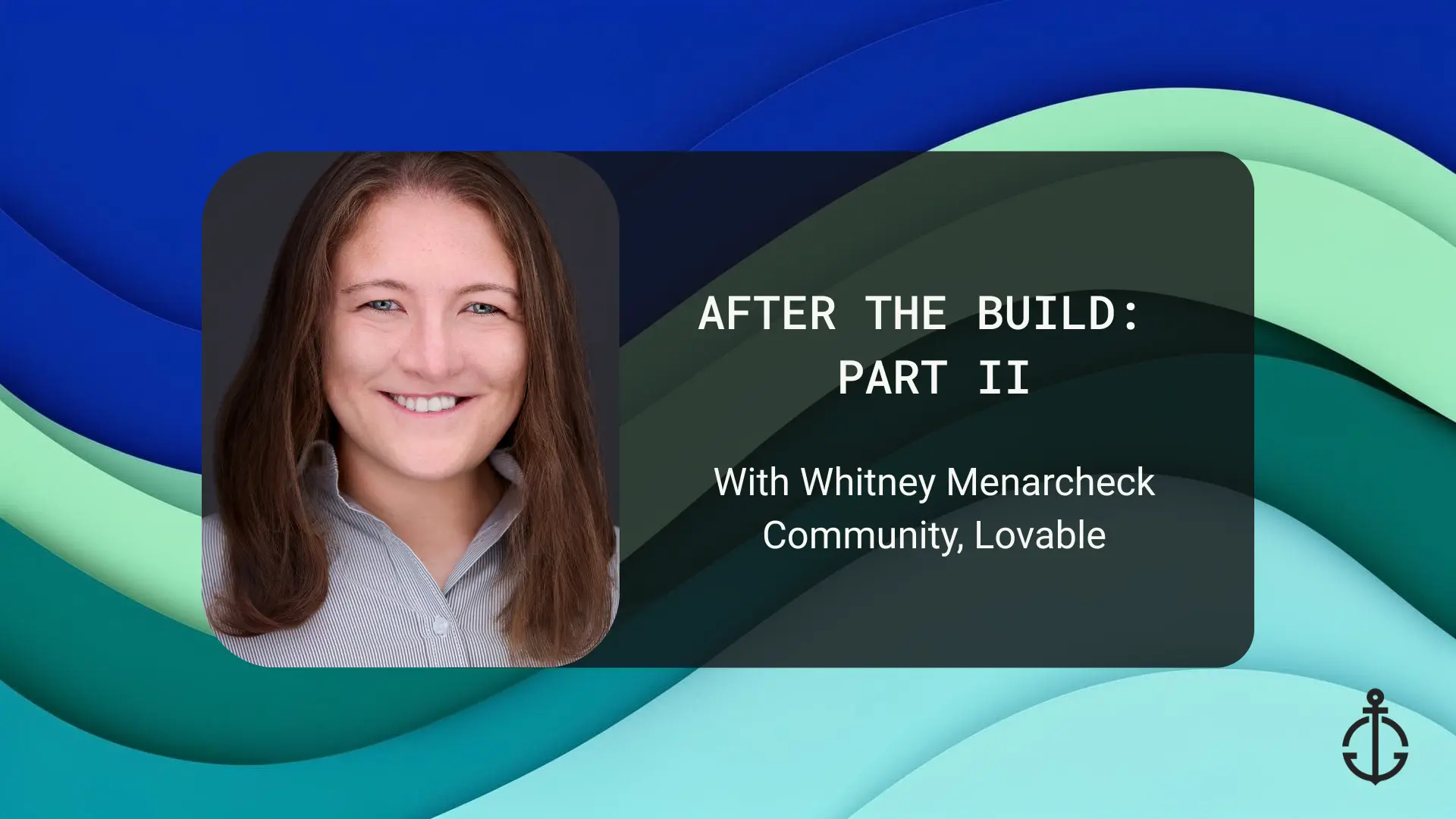
Momentum Is Emotional Before It's Operational
After a build, momentum doesn't fail because strategy is wrong. It fails when the emotional load becomes too heavy to carry alone. In this conversation, Whitney Menarcheck shares what helps people stay in the game long enough for momentum to compound.
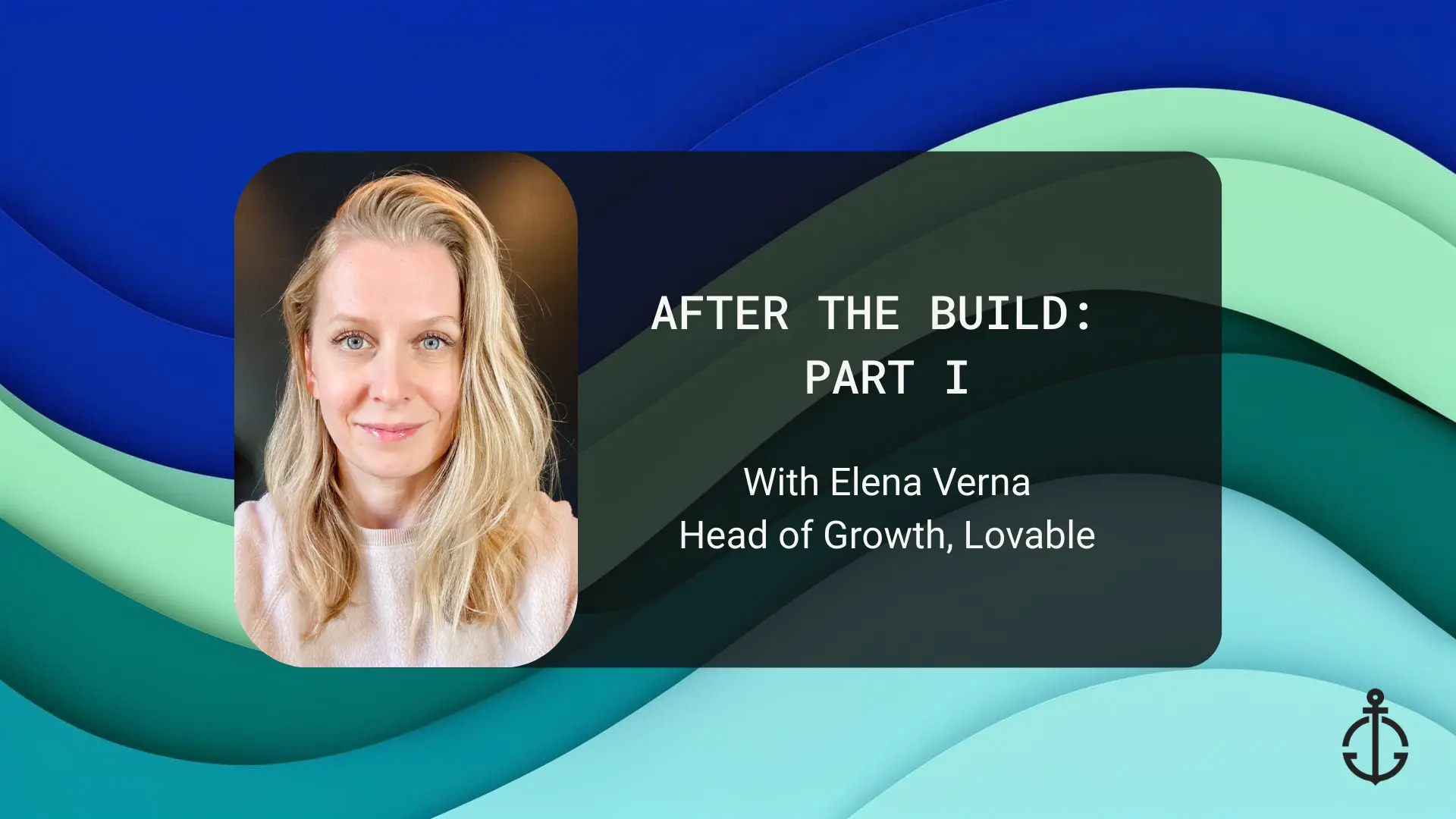
Optionality Isn't a Luxury. It's a Strategy.
After a build, you might find yourself asking "what now?" once the ship dust settles. In this conversation, Elena Verna shares how to think about optionality as a strategy when figuring out where to place your bets and why the best next step is often the one that keeps the most doors open.
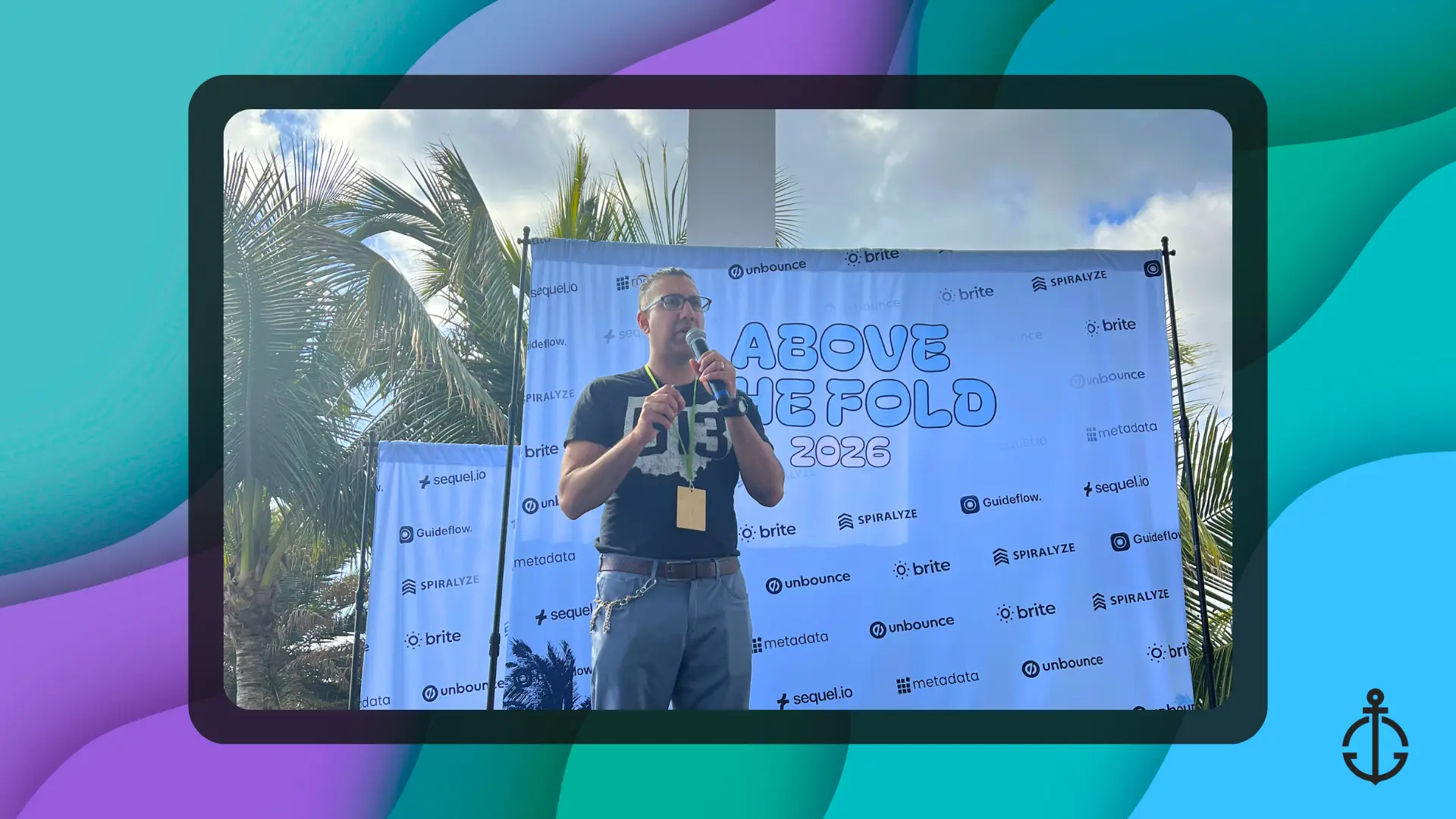
What Above the Fold Reinforced About Cognitive Load, Community, and AI-Era Moats
Above the Fold wasn't a conference. It was a room full of operators working at the height of their craft. From pricing psychology to homepage positioning to AI orchestration, the throughline was the same: reduce cognitive load, earn trust, and let clarity compound.