
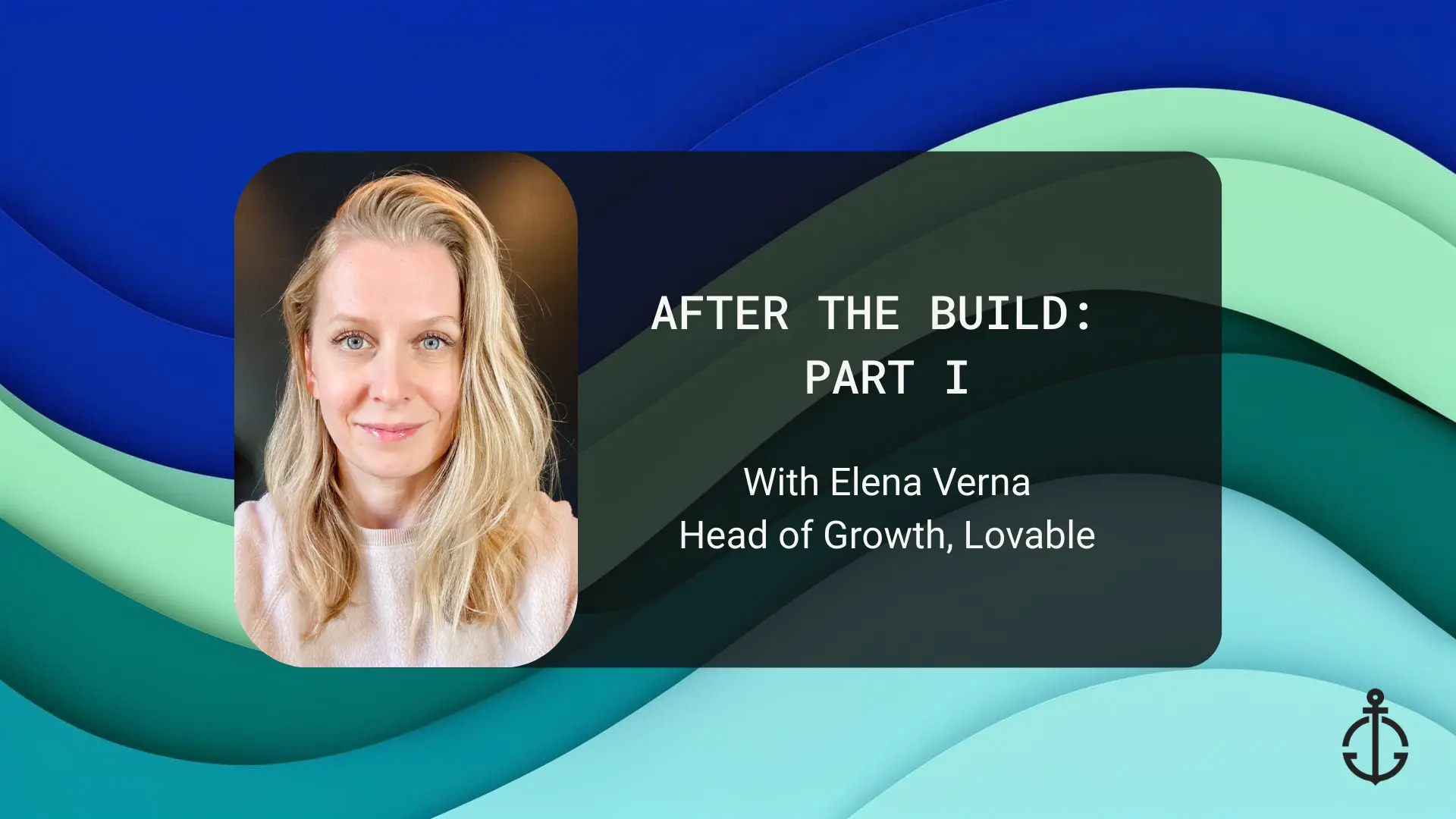
This post is about what actually determines whether momentum compounds or stalls after a build, launch, or moment of visibility.
In a conversation with Elena Verna, we talked about optionality as an operating system, not a hedge. The idea that every meaningful decision should be evaluated based on whether it expands or narrows your future options a year from now.
We covered why the messy middle after a win is where momentum is designed or lost, how to pressure-test a product without overcommitting too early, and why the next 30-90 days matter more than any long-term plan.
Navigating the "now what"
Momentum rarely disappears with a noticeable bang. It typically slowly burns out. After a build. After a launch. After a demo day. After a win that briefly made things feel obvious again.
That stretch is where most operators get stuck. Not because they're careless, but because the work changes shape. The job is no longer shipping. It's deciding.
Coming out of winning the B2B category of SheBuilds on Lovable for SiteAlign, I found myself in a rare position. I suddenly had a shipped product, renewed confidence as a builder, and real flexibility about what came next.
And with that flexibility came a harder question. Not "what should this turn into," but "how do I place the next bet without accidentally narrowing my future options?"
That's why I wanted to talk with Elena Verna, the undisputed growth GOAT and an incredibly thoughtful person who has walked this path many times over. Not to figure out what this should become, but to figure out how to choose what comes next.
We didn't talk about hype or vanity metrics. We talked about optionality, how to recognize it, how to protect it, and how momentum compounds or decays based on the choices you make in the next 30 to 90 days.
Over the past few weeks, I've also had the chance to talk with Whitney Menarcheck and Season 01 SheBuilds winner Kat Hill Contag about the same question: what actually comes after a build, when momentum can compound or fade.
What surprised me most is how calibrated these conversations were. They weren't about what something should become. They were about how to learn faster, stay honest about tradeoffs, and make decisions that expand future options instead of closing them.
This post is part of a three-part series exploring what actually comes after a build, from decision-making and emotional momentum to operator execution.
Optionality as an operating system
Optionality isn't just a hedge. It's a way of structuring decisions so your future choices expand instead of shrink. Early in our conversation, Elena shared the mental model she uses to make big decisions:
Every single time there is some opportunity in front of me, I ask: if I take it, will it give me more options in my career a year from now? And if the answer is yes, I go into it.
That question is deceptively simple. But it's ruthless in practice. It cuts through fear-based decision making, prestige chasing, false urgency, and the temptation to stay busy instead of being intentional.
Optionality isn't about keeping doors open forever. It's about choosing paths that expand your future surface area instead of narrowing it.
Elena was equally clear about the inverse:
"If it keeps me in the same place or doesn't give me access to more opportunities, then I don't do it. I try to pivot and do something else."
That applies to jobs. To side projects. To where you live. To what you build next.
It also applies to the uncomfortable middle, when you've done something meaningful and now have to decide whether to double down or move on.
Optionality sounds abstract until you hit the messy middle, because that's where you find out whether your choices are expanding your future or shrinking it.
The messy middle is where momentum is either designed or lost
After a build, most operators default to one of two modes:
- Over-committing too early: Locking into a path before there's enough signal.
- Drifting: Letting time pass without running real tests, which closes doors anyway.
Elena named this explicitly:
"You have a small window to capitalize on the success. Fading is very real when you are not intentional about your next step after a win."
Her advice wasn't to rush. It was to pressure-test intentionally.
"You are in learning mode. You are not in execution mode yet."
What does it look like to pressure-test this without going all in? How do you learn fast without betting everything before you have signal?
That distinction matters. Execution without enough learning is a fast path to overcommitment. Drift without intentional testing closes doors.
What I'm actually doing in the next 30-90 days
After this conversation, I mapped out a few experiments, not goals. These are the specific things I'm testing to see whether this product has traction worth building on:
- 1. User testing before even one small transaction: Before I create even a tiny monetization moment, get more users to determine whether people actually value this enough to pay.
- 2. Product feedback with a narrow audience: I'm running feedback loops with a specific group (e.g., 30 real users) to see if usage sticks.
- 3. Community integration: I'll test whether the SheBuilds, Lovable, and related professional or trades networks that apply to my product amplify signal or whether reach stays flat.
- 4. Pressure-test willingness to pay: Before scaling, I want to understand whether paid interest is repeatable. Would those 30 users be sad if the product went away after using it for 7, 14, or 30 days? Would they pay to keep it around for continued use?
Elena was explicit that early experimentation should be cheap and directional:
You are testing a lot of hypotheses... to learn enough to know what you should say no to and what the winning strategy is.
If these signals don't compound, I'll know to revisit the shape of the bet.
Community as infrastructure
One part of this conversation I didn't expect was how directly Elena framed community as infrastructure.
She didn't describe SheBuilds on Lovable as marketing or awareness. She described it as something closer to a distribution and learning system, a place where builders earn visibility, get real feedback, and start momentum they couldn't generate alone.
My goal is for these people to be successful, for them to talk about how Lovable helped them be successful. And I want to help at scale.
That framing has stuck with me. Community isn't a side benefit. It's how signal compounds.
If you're trying to learn fast, get product feedback, and build early traction, community is one of the most underleveraged pieces of infrastructure available.
This also connects to something I've been thinking about more broadly: how momentum doesn't just come from shipping. It comes from staying connected to people who reflect reality back to you, hold you accountable, and remind you that you're not alone in the messy middle.
This could be enough
Midway through our conversation, Elena said something that hit harder than I expected.
She wasn't telling me to scale. She wasn't pushing growth.
She was reframing the question entirely.
Not because SiteAlign is small.
But because:
Maybe this can be a product that supports you very comfortably. And it doesn't have to be anything really big.
That framing matters. It removes the pressure to build the next unicorn and replaces it with a more anchored question:
Can this support a life and a career I actually want?
Optionality means being honest about which doors you're opening and closing
We also talked explicitly about tradeoffs. Building your own thing increases optionality in some directions and decreases it in others.
Elena was clear-eyed about that:
"Building your own business can increase your optionality, but it can also decrease it depending on what kind of optionality you're looking for."
If your goal is a big-company role, entrepreneurship might not help.
If your goal is autonomy, leverage, and staying in the startup world, it absolutely can.
The point isn't to pretend there's no downside. The point is to choose intentionally.
The shift happening in marketing (and why it matters here)
Toward the end of our conversation, we zoomed out.
Elena shared something I think many operators feel but haven't fully named yet:
I think marketers will be expected to ship things.
Not just campaigns. Not just messaging. Actual, functioning things.
She talked about how even her own bar keeps moving — onboarding into tools like Cursor, making direct changes in live applications, fixing flows without opening tickets.
"If I don't like how a button looks or a redirect isn't working, the pressure comes back to me to just go do it."
What's happening isn't a loss of specialization. It's a convergence.
"Everyone is expected to do marketing, product, engineering, and design 101. The deep specialties still matter, but the baseline has shifted."
For marketers especially, she described this as liberating:
"I feel so liberated that I can just vibecode an app, launch it, and get early signals and usage."
This is why micro-products, tools, and functional experiences are becoming distribution in their own right. Not adjacent to marketing — as marketing.
Choosing between a job, a startup, and a "solo path"
The most personal part of our conversation wasn't about product at all. It was about life design.
I'm at the end of a lease. I'm open geographically. I'm weighing full-time roles, consulting, and building.
Elena didn't tell me what to choose. She reframed the decision.
"Use this test to get clarity on whether you need to hunt for a full-time job, or whether you can move anywhere you want and run this without chasing someone else's dreams."
She acknowledged her own bias — burnout from corporate tech, a preference for autonomy once basic comfort is met.
Quality of life has to matter more than financial upside after a certain threshold.
That doesn't make one path right and the other wrong. It makes the decision human.
That reframing stayed with me longer than anything else we talked about.
What this conversation changed for me
I didn't walk away with a tidy answer. I walked away with a better framework.
- Optionality is something you design, not something you wait for
- Momentum compounds when you test reality, not narratives
- The next 30 to 90 days matter more than the next three years
- Shipping creates leverage — personally and professionally
- Community isn't just vibes. It's real infrastructure for momentum, learning, and distribution
Most importantly, I walked away with a sense of responsibility.
Elena wasn't just giving advice. She was inviting me — and others like me — to help shape what comes next. To pay forward what works. To make the messy middle more navigable for the next wave of builders.
If you're in your own "what now?" moment
Here's the question I'm sitting with, borrowed directly from Elena:
If I take this next step, will it give me more options a year from now?
Not more busy-ness. Not more validation. More real options.
If you're navigating a post-launch lull, a role transition, or a moment of unexpected flexibility, I hope this helps you make that next decision with more clarity — and less pressure to have it all figured out.
Momentum doesn't disappear on its own.
It's either designed — or neglected.
I'm choosing to design it.
In the next conversations, I'll explore the other forces that shape whether momentum survives: the emotional conditions that help people follow through, and the operator choices that turn a build into lasting leverage.
Where to find Elena Verna
Elena regularly shares clear, practical thinking on growth, optionality, and decision-making for operators navigating similar moments.
- LinkedIn: Where she shares practical thinking on growth and optionality
- Newsletter: Her deeper dives on growth strategy and decision-making
- Website: Her personal site built with Lovable
- X (Twitter): Real-time takes and conversation
- SheBuilds on Lovable: Buildathon on March 8, 2026
Built With
(Building in Public)About
Anchor GTM is a space for first-hand operator insight from the messy middle of building, shipping, and deciding what comes next. More to come.
More from the series
Momentum Is Emotional Before It's Operational
After a build, momentum doesn't fail because strategy is wrong. It fails when the emotional load becomes too heavy to carry alone. In this conversation, Whitney Menarcheck shares what helps people stay in the game long enough for momentum to compound.
What Operators Do After a Big Ship
After a build, momentum creates opportunity and pressure at the same time. In this conversation, Lovable Ambassador and SheBuilds Season 01 winner Kat Hill Contag shares how operators decide what's next and turn a ship into leverage without rushing to scale.
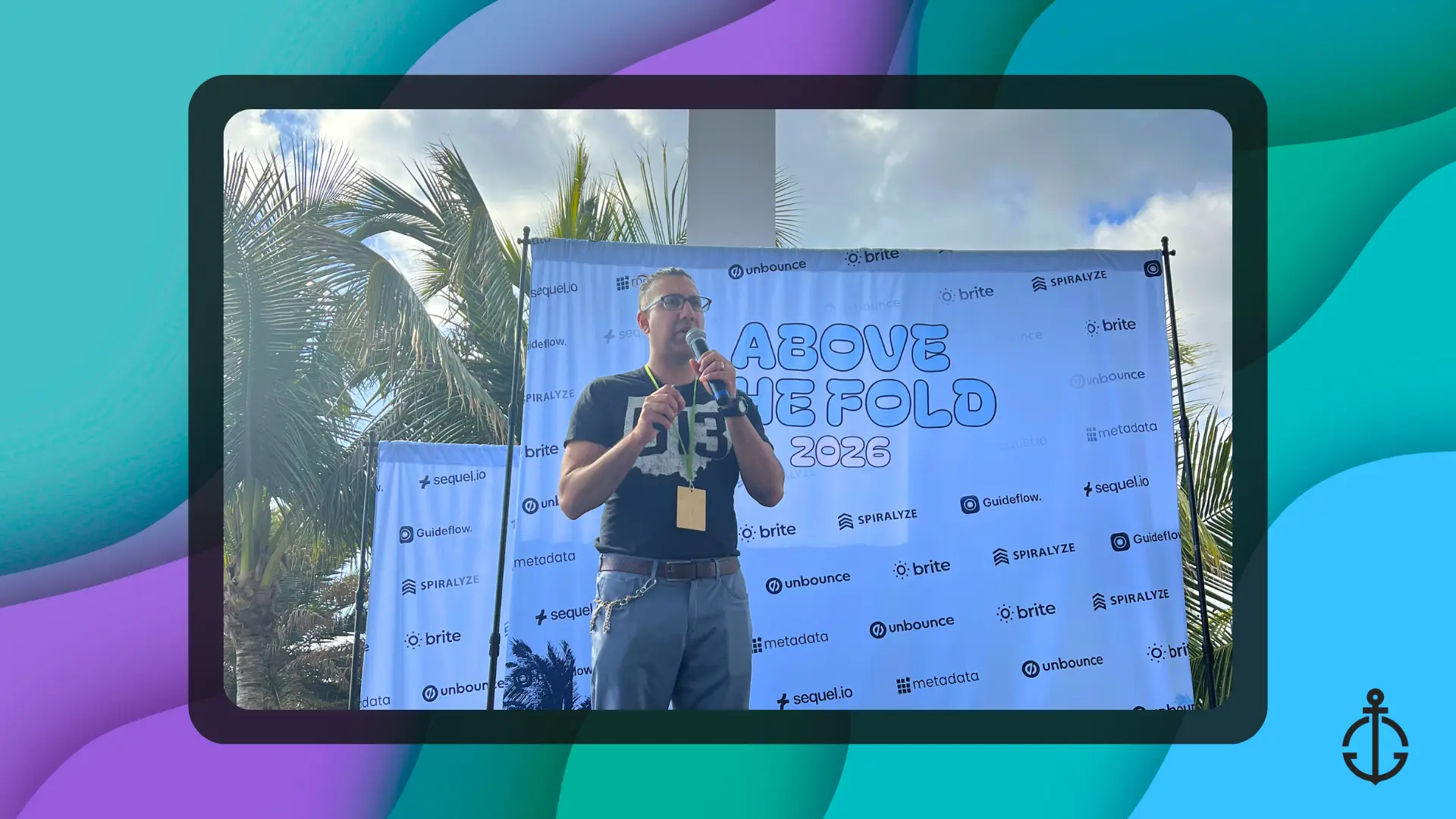
What Above the Fold Reinforced About Cognitive Load, Community, and AI-Era Moats
Above the Fold wasn't a conference. It was a room full of operators working at the height of their craft. From pricing psychology to homepage positioning to AI orchestration, the throughline was the same: reduce cognitive load, earn trust, and let clarity compound.